Ju 52
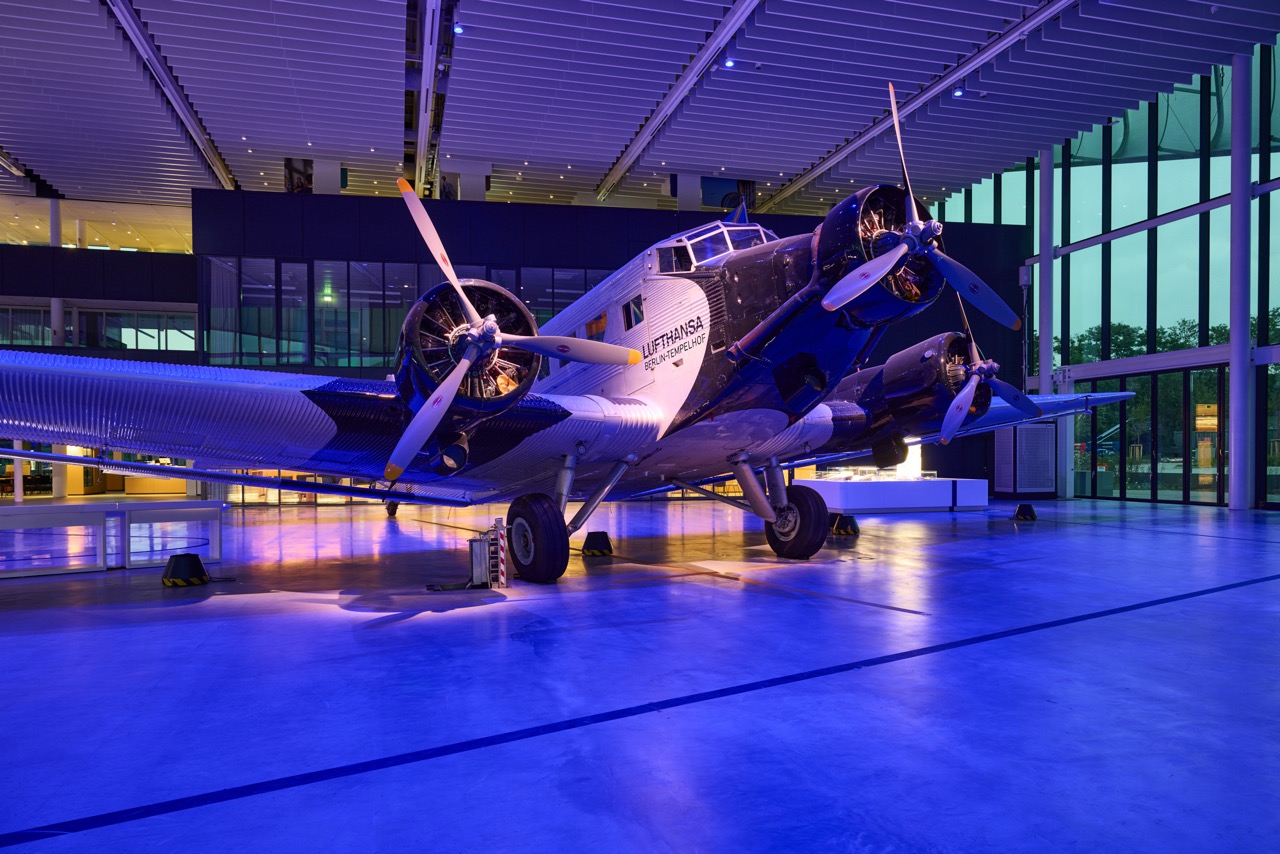
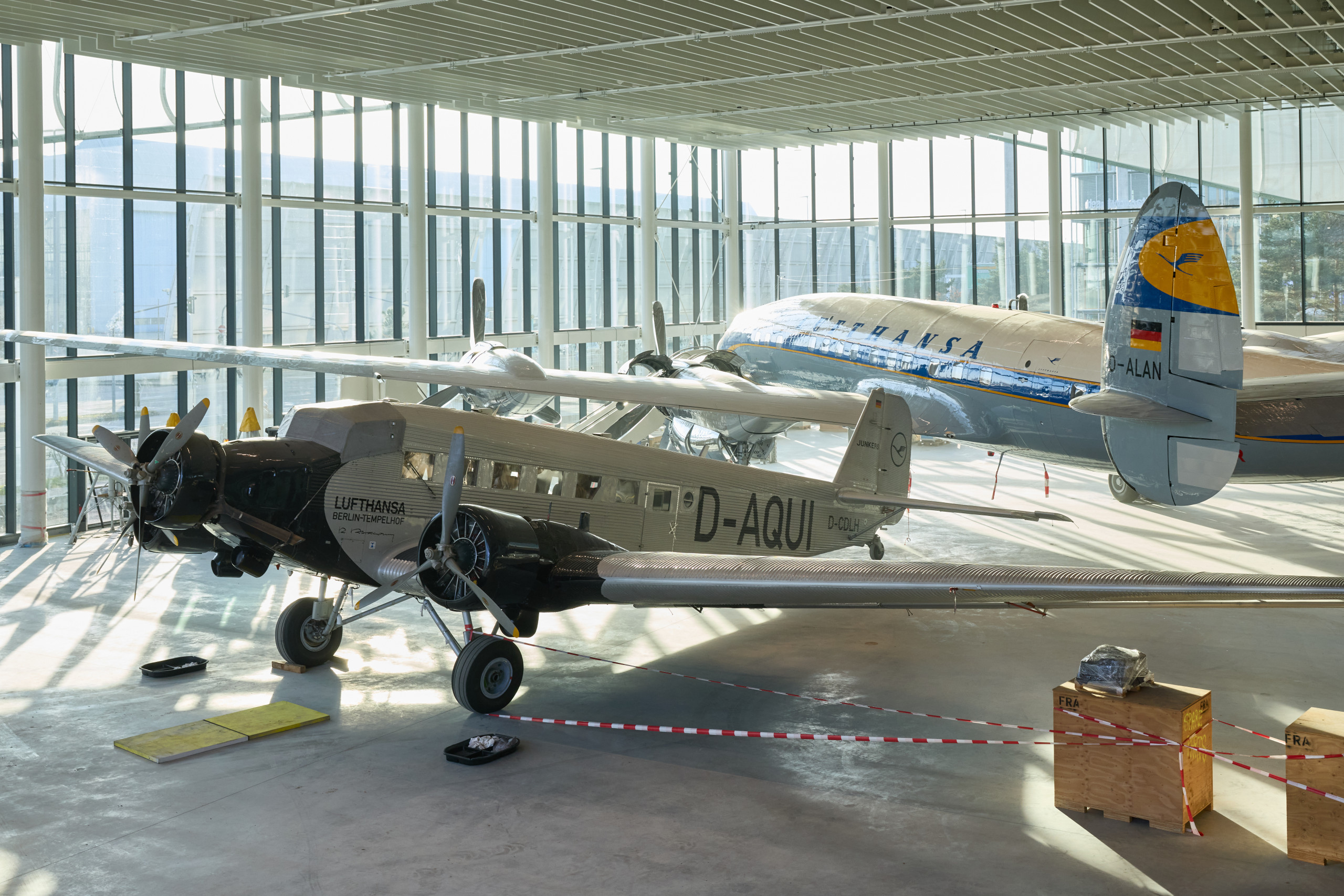
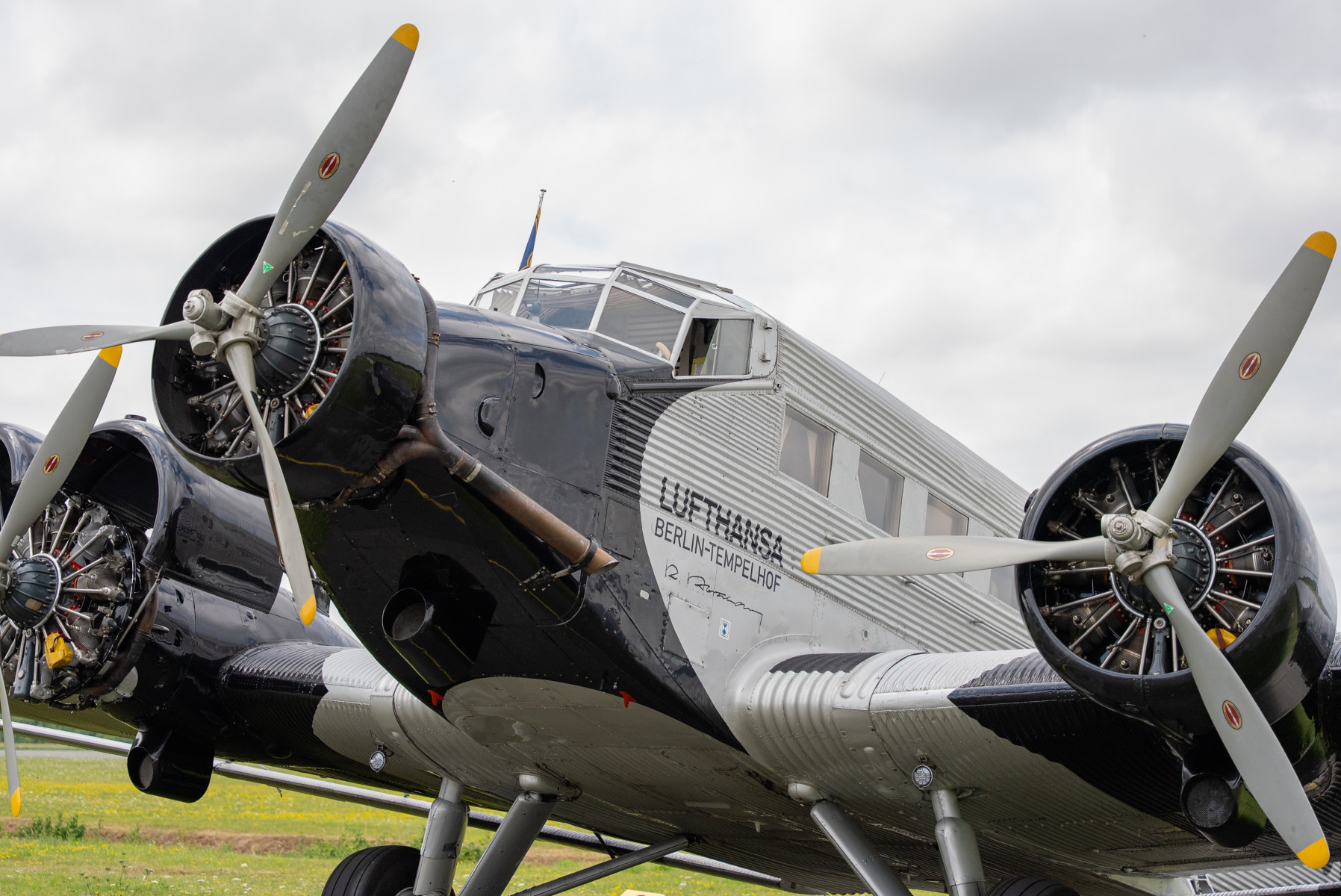
The Ju 52 D-AQUI is a symbol of the pioneering years of the first Lufthansa. Today, it stands in Hangar One – restored and maintained by the Deutsche Lufthansa Berlin-Stiftung. Get to know this aviation legend!
Ju 52 – Lufthansa icon and
heart ofHangar One
heart of
First developed in the 1930s, the Ju 52 set new standards in passenger and cargo transport. Its robust construction and ability to land on unpaved runways, in particular, made it synonymous with reliability and innovation. The first Junkers Ju 52 was added to the Lufthansa fleet in 1932 and quickly became the backbone of the airline’s fleet. Valued for its cost-effectiveness and reliability, the aircraft accounted for approximately 50 percent of the Lufthansa fleet at that time.
The Ju 52 was not used solely for civil aviation. During World War II, it served as a transport and supply aircraft for the Luftwaffe and was also used for military pilot training and as a makeshift bomber. Starting in 1940, Lufthansa was required to hand over aircraft to the Reich Aviation Ministry.
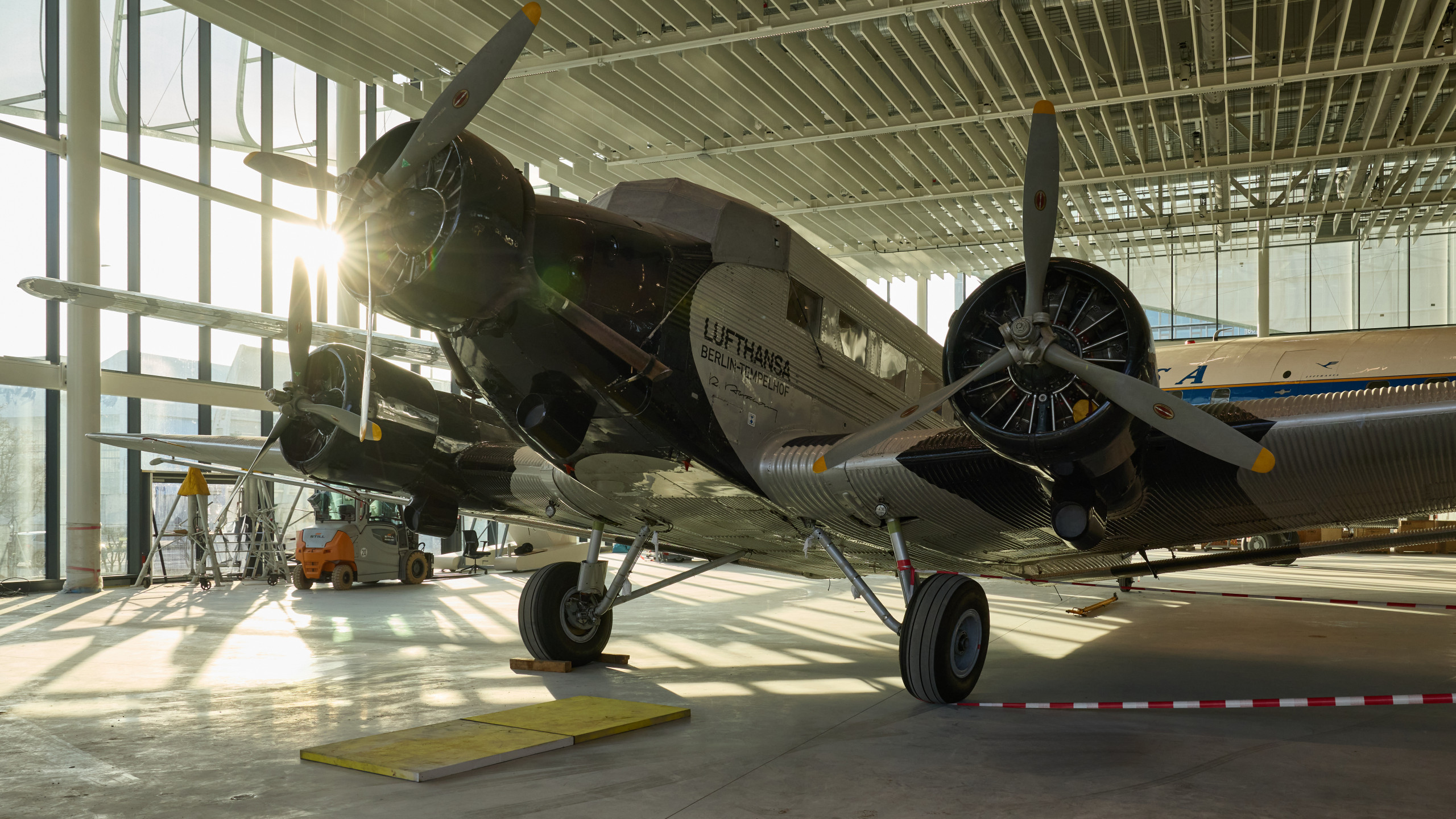
Today, the “Aunty Ju” is far more than just an aircraft — it is a symbol of pioneering spirit, engineering excellence, and the fascination of aviation. This iconic aircraft makes the hearts of aviation enthusiasts beat faster: with its distinctive corrugated metal look, three characteristic engines, and unparalleled reliability, the Ju 52 has captivated pilots, passengers, and aviation enthusiasts for generations.
To this day, this unique aircraft remains in the care of the Deutsche Lufthansa Berlin-Stiftung (DLBS). For decades, the foundation has made the Ju 52 accessible to the public. Under its banner, the D-AQUI completed numerous flights, clocked approximately 11,500 flight hours and carried about 250,000 passengers. With its presentation in Hangar One, this “Aunty Ju” now has a permanent home – as a historical original and central exhibit of the exhibition.
Interested in the technology, figures, and special features of the Ju 52? Find more details in the fact sheet available for download.
The Ju 52 was not used solely for civil aviation. During World War II, it served as a transport and supply aircraft for the Luftwaffe and was also used for military pilot training and as a makeshift bomber. Starting in 1940, Lufthansa was required to hand over aircraft to the Reich Aviation Ministry.
Today, the “Aunty Ju” is far more than just an aircraft — it is a symbol of pioneering spirit, engineering excellence, and the fascination of aviation. This iconic aircraft makes the hearts of aviation enthusiasts beat faster: with its distinctive corrugated metal look, three characteristic engines, and unparalleled reliability, the Ju 52 has captivated pilots, passengers, and aviation enthusiasts for generations.
Homecoming after an odyssey across all continents
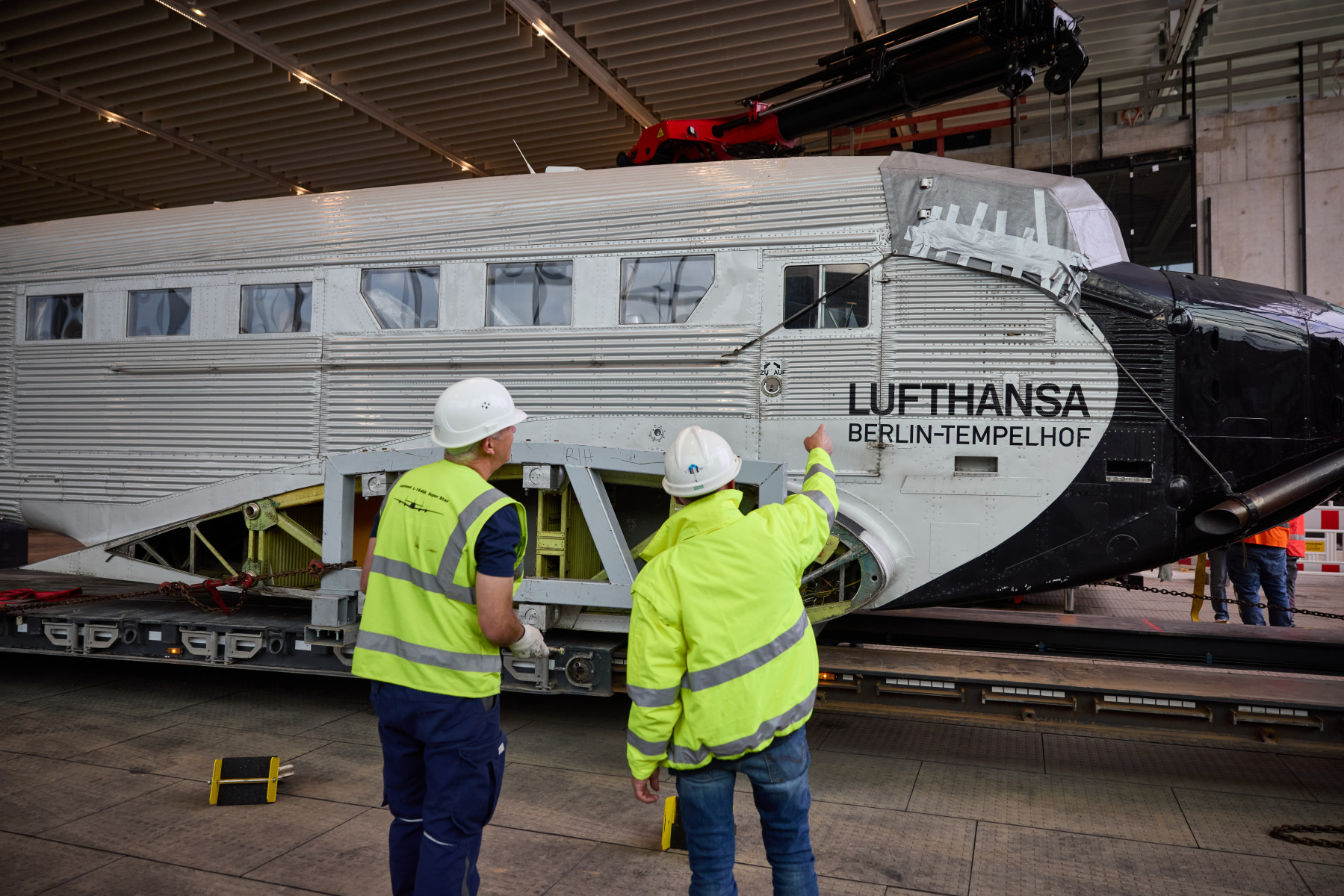
Versatility is also evident in the Ju 52 with the historic registration D-AQUI on display in Hangar One. The exhibit looks back on an eventful history. After its maiden flight in 1936, it was in service worldwide– from Northern Europe to South America and the U.S.. Over the decades, it was repeatedly repaired, rebuilt and adapted to meet new requirements. In the 1980s, it finally returned to its roots: Lufthansa acquired the aircraft and extensively restored it. Since then, the D-AQUI has been inextricably linked to the company's history and, until it was taken out of service in March 2019, delighted hundreds of thousands of passengers on its sightseeing flights.To this day, this unique aircraft remains in the care of the Deutsche Lufthansa Berlin-Stiftung (DLBS). For decades, the foundation has made the Ju 52 accessible to the public. Under its banner, the D-AQUI completed numerous flights, clocked approximately 11,500 flight hours and carried about 250,000 passengers. With its presentation in Hangar One, this “Aunty Ju” now has a permanent home – as a historical original and central exhibit of the exhibition.
Interested in the technology, figures, and special features of the Ju 52? Find more details in the fact sheet available for download.
What does DLBS do?
Who is responsible for ensuring that “our” Ju 52 has been preserved to this day? Behind the legendary aircraft is a foundation that preserves Lufthansa's history and keeps it alive. In Hangar One, it looks after and maintains the aircraft on display. Curious?
Our Ju 52 D-AQUI is a pioneer of the early days of Lufthansa's global scheduled service. It combines a pioneering spirit, technical innovation and the confidence of a new era in flying.”
Wolfgang Servay
PR and Communications,
Deutsche Lufthansa Berlin-Stiftung